

slaveofAllah88
Slave of Allah (swt)
aslam o aliakum wa rahmatuAllahi wa barakatuhu,
This was a lecture given by br Nouman Ali khan, i shared the event here it was live broadcaste as well, InshAllah the recording can be seen on the link below:
http://new.livestream.com/accounts/974089/events/1835435
The transcript of the lecture im sharing, please make dua for transcriber and also benefit yourself and others, there are so many people who are going through hardship, and come to the forum for advice, although members can offer advice but there is no advice greater than the advice by Allah (swt) through his book quran, so inshAllah please benefit and share.
JazakAllah khair
The Qur’an’s Remedy For Sadness
By Br. Nouman Ali Khan.
*!
· People around us are also Rizq, the ones we learn from.
· Why did I choose this topic?
○ We all have challenges in life and one might think that Qur’an doesn’t deal with the challenges I have. However, it is wrong thinking. Qur’an deals with almost all the crisis we all face.
· We all are humans and have flaws/problems.
· If you look around you, you might think humans are flawed but Allah teaches us that He created us in the best manner. (laqad khalaqnal insane fi ahsani taqweem – surah teen)
· Taqweem comes from qama, which means stand. Taqweem means to keep something stand=> to build a structure together that aren't suppose to fall apart => ALLAH is taking credit for creating us in the firm way => before saying that He created us in the best manner He takes many oaths (wat teen, wazzaitun …) then Khalaqna => ALLAH uses NA, which means WE. Allah uses We after the oaths, which is not the normal form in the quran actually the 'huwa' , the he but when Allah (subhanu wa ta'ala) wants our special attention on something he will resort to the 1st person plural in the quran and that is we, the scholars commented this is actually to illustrate how close Allah is to the human being.
· Surah Rehman (mention ayah). Faan is something that is meant to die, something that has a timer on it in other words its winding itself down. See quluman aleha faan means everything will eventually detriote and die, the clock is ticking on everyone of us. When human being starts having issues, its cause by design it was suppose to go through certain challenges.
· We all have challenges and we should call them tests, not flaws, emotional ones, physical ones.
· Arabic Proverb: Perhaps words can hurt more than a beating does. This proverb is on psychology. Words have more ability to hurt us in terms of emotions.
*!
Sadness: How does the quran deal with it
· Divide the talk into three parts;
PART 1 OF THE TALK:
· Some areas worth exploring for psychology, counseling, etc. especially dealing with sadness.
· Some words used for sadness:
*!
· Gham, a variation of that word is Ghamam => clouds which don’t allow for sunlight to come so it leads to sadness, dark clouds result in storm. => a condition of unrest. Gham => life gets cloudy => sadness when bad thing hasn’t happened yet but you anticipating it will happen => it is when you expect things will get worse.
· Gham is used in particular context in Qur’an.
*!
· Another word used for sadness is Al Huzn (HA, za, noon), its for one to remain unhappy/uneasy about something, you are not settled, => a condition you keep worrying out of sadness and can’t sleep. => it happens as a result of something. => it is one of the common words used in Qur’an for sadness.
○ La khawfun alayhim wala hum yahzanun => in this ayah “hum” is an addition => it is used to allude to someone who is not there => somebody else. Believers won’t have any fear and sadness on the day of judgement, somebody else will have huzn on that day.
○ Huzn => it will be there in life but no grief will be like grief of Akhirah.
○ Sadness is part of life.
○ Sadness doesn’t mean that you don’t have iman. Prophets and righteous people experienced a great deal of sadness.
○ Qur’an is a part of life, it’s a reality of life, quran is not to eliminate sadness but to navigate it cause its one of the test of life, like happiness is one of the test of life, like anger is one of the test of life.
○ Sadness, anger, etc are emotions which are like our unseen limbs. We cannot eliminate those. Rather we have to navigate those.
· *!Another word for sadness is al- bafth (baa, faa, thaa) => deep sadness inside, it affects everything a person does, and cannot even explain his/her state. => perpetual depression. => many people have it.
○ The word bafth occurs in the quran in one of the duas that a Prophet of Allah (subhanu wa ta'ala) experienced continous bafth and huzn:
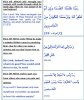
قَالَ إِنَّمَا أَشْكُو بَثِّي وَحُزْنِي إِلَى اللَّهِ وَأَعْلَمُ مِنَ اللَّهِ مَا لَا تَعْلَمُونَ [١٢:٨٦]
He said, "I only complain of my suffering and my grief to Allah, and I know from Allah that which you do not know. [12:86]
○ Depression is huge problem in our society and muslim ummah is no exception.
○ Complaining to Allah is okay, but it should be done as a child complains to his mother when is sick. He doesn’t say you made me sick.
○ We tell our problems to someone who is close to us, not random people.
○ In Arabic it is said: A man in the house of his mom turns into a baby.
○ When that kind of sadness, you don’t feel like anybody would understand, nobody can relate to what your problem is and the only One, the One that understands you totally.
*!
· Another word: Waieel: its used to express when someone feels like they are cursed, when a person curses at someone and wishes the worst upon them its 'wailak', variation in the words mean feeling like im damned or cursed, that everything I do turns to poison nothing I do works out, you feel like anything you do wont change the situation => one of the worst words of the Arabic language=> also used to describe place in hellfire. => it means being hopeless, feeling cursed. => this word is also used for shock.
*!
· Another word: Asaf => some say root original of the word is Hebrew => the name Yusuf comes from it. => it means kind of sadness that turns into other negative emotions (usually anger), e.g. being sad because of failing an exam and then getting angry at someone else.
○ When Musa came from talking to ALLAH back to his people and saw his people worshipping a cow he became sad and that resulted in getting angry at his brother, harun. At that point the word asaf is used.
*!
· Another word: Asa (hamza, seen, alif or yaa) => regret/depression over an opportunity that was lost, I could have done that => on something you did or didn’t do=> you don’t let go of your past.
○ There is a difference between I messed up and I am messed up.
○ You messed up and you can fix it.
○ One of the descriptions of the people of iman is that they have qalbun saleem. Qalb means heart. Saleem means healthy. i.e. their heart does not has any depression, etc.
○ Fear/depression/etc have affects on our heart and Iman!
*!
Part 2 of the Talk:
· Different cases in the quran where Allah (subhanu wa ta'ala) describe that sadness is a reality, so you are not less of a person for having sadness.
· ALLAH mention sadness is part of life.
· Ibraheem (alayhi salam) – was expelled from his house by his father.
· Yusuf (alayhi salam) – was betrayed by his elder brothers.
§ Younger ones want to be like their elder siblings.
§ Yusuf was very close to his father. Wasn’t only son telling his dream to his father but father was also listening to dream of a child, this point needs our appreciation as indeed it is hard to listen to dreams of kids.
§ Note the sadness of the father, Yaqub (alayhi salam), when his son is taken away from Him.
§ Father doesn’t even know where the child is!
· Love brings sadness, the ones we love when they suffer we suffer if not more than them then atleast equal.
· Musa (alayhi salam) – what his nation did to him.
· Rasoolullah (sall Allāhu ʿalay-hi wa-sallam) – How Quraish dealt with him.
· Rasoolullah – What His uncles did to him.
§ Abu lahb celebrated when son of Rasoolullah died! Imagine your uncle celebrating when you are in such a great pain.
· Sometimes most hard sadness can come from families as they know us more and are more close to our hearts and have access to our hearts.
· Parents, children, husband and wife, uncles, cousins etc.
· Prophet Muhammad (sall Allāhu ʿalay-hi wa-sallam) himself experienced these things.
· Adam (alayhi salam)’s sadness with ALLAH, when He was thrown out of jannah. How do I (Adam (alayhi s-salām)) know ALLAH forgave me? ALLAH gave him a gift.
· ALLAH gave Adam (alayhi s-salām) access to the words and as a result forgave him.
· *!Dua of Adam (A.S) to Allah in repentance:
رَبَّنَا ظَلَمْنَا أَنفُسَنَا وَإِن لَّمْ تَغْفِرْ لَنَا وَتَرْحَمْنَا لَنَكُونَنَّ مِنَ الْخَاسِرِينَ (7:23)
Rabbana thalamna anfusana wain lam taghfir lana watarhamna lanakoonanna mina alkhasireena
"Our Lord! We have wronged ourselves. If You forgive us not, and bestow not upon us Your Mercy, we shall certainly be of the losers."
Al-Qur'an, 007.023 (Al-Araf [The Heights])
· We got that dua in inheritance.
· Nuh (alayhi s-salām) – and His son. How his son caused him sadness.
· Lut (alayhi s-salām) – and his sadness.
*!
· In Battle of Uhud, muslims suffered tremendously. => Lack of discipline, loss of very important muslim leaders, the rumor of the death of the Rasoolullah was spread, loss of the teeth of Rasoolullah (sall Allāhu ʿalay-hi wa-sallam) and some great sahaba died. ALLAH says: gham upon gham upon gham. It hit you with so many problems that you stop worrying about these sadness.
· When a person has 1 problem he says I am in problem, when a person has 2 problems he says I m in problems but when a person has a lot of problems he just stops worrying about them so much.
*!
3rd Part of the Talk:
*!
3 Scenarios:
· There are thousand of remedies for sadness in quran, but everytime you are close to talking about a solution, dua comes up. Adam (alayhi s-salām) was sad, Allah (subhanu wa ta'ala) gave him a dua…..
1. Sadness that you brought upon yourself by doing something wrong.
• Carefully study the dua of Musa. After making this dua Musa got job and got married as well.
• Musa (alayhi s-salām)
• Dua of musa =>
رَبِّ إِنِّي لِمَا أَنزَلْتَ إِلَيَّ مِنْ خَيْرٍ فَقِيرٌ (28:24)
rabbi innee lima anzalta ilayya min khayrin faqeerun
"My Lord! Truly, I am in need of whatever good that You bestow on me!"
Al-Qur'an, 28.024 (Al-Qasas [The Narrations])*!
• A key to move on in life, learn from dua of Musa (as)
• Master I am not capable, whatever good you send to me I will grab it.
• Good has two meanings.
○ Good opportunities in life
○ If you have made a mistake, only way to move on is to become desperate to do good deed. Musa (alayhi s-salām) asking for Allah (subhanu wa ta'ala) to bless him with opportunity to do good deeds.
2. Sadness that someone else brought upon you.
· When Musa’s nation caused him pain he made a dua.
· Quran 5: 25
قَالَ رَبِّ إِنِّي لَا أَمْلِكُ إِلَّا نَفْسِي وَأَخِي*!ۖ فَافْرُقْ بَيْنَنَا وَبَيْنَ الْقَوْمِ الْفَاسِقِينَ [٥:٢٥]
Rabbi inni illa amliku illa nafsi wa akhi, fafruk bainana wa bainal qaumal fasiqeen.
[Moses] said, "My Lord, indeed I do not possess except myself and my brother, so part us from the defiantly disobedient people."
· You can pray to stay away from people who cause you pain.
○ There is no escape from family, you cant part from family just other people.
○ Prophets had to stay with their families until ALLAH told them to go far from them.
○ For family => pray to get relationship improved with the family.
وَالَّذِينَ يَقُولُونَ رَبَّنَا هَبْ لَنَا مِنْ أَزْوَاجِنَا وَذُرِّيَّاتِنَا قُرَّةَ أَعْيُنٍ وَاجْعَلْنَا لِلْمُتَّقِينَ إِمَامًا [٢٥:٧٤]
And those who say, "Our Lord, grant us from among our wives and offspring comfort to our eyes and make us an example for the righteous."
§ Qura - something that’s stationary, that you cant take your eyes away from, you love them so much you cant look away.
○ For non-family who are causing you a lot of grieve => you can pray to stay away from those people.
3. A sadness a result of a circumstance, e.g. car accident, sickness etc.
· Things you can't control.
· People have bad experiences and they blame Allah (subhanu wa ta'ala) and you know the only people who can do that are who don’t know who Allah (subhanu wa ta'ala) is; you had a long distance relationship with Allah (subhanu wa ta'ala) and you made a lot of assumptions.
· I have come to realize this about relationship in general; In distant relationship there are many misunderstanding. We kind of starting assuming things about the other person. Same is with ALLAH. If we have distant relationship with Him then we will start assuming things about HIM, we will start misunderstanding Him, e.g: He won’t forgive me, etc. BE CLOSE TO ALLAH!
Remedies
*!
· ALLAH is Ar-Rahman, Ar-Rahman comes from the arabic word Rahma, commonly translated as mercy.
· Normally people translate Rahman as Merciful, but there is a better way to look at it.
· Mercy = is used when you are spared, like u were about to be punished but then you are forgiven due to mercy.
· Actually the arabic word rahma in arabic comes from rahm, which means the belly of a mother when she is pregnant, the womb of the mother.
· And in the hadith, rahm is tied to rahma, that Allah (subhanu wa ta'ala) says the way you will understand what rahma is, by reflecting upon on the womb of the mother. That will give you some idea what rahma is, and then you might begin to understand who ar-rahman is.
· Just like when a child is in the womb of its mother and doesn't has to worry about anything as mom is the one who gets the food and takes care of everything, this womb was our world and we were wrapped in care and love, and we offer nothing but grieve to the one holding us, the mom is cause pain by this child, she almost dies giving birth to this child. Similarly ALLAH wraps us in His care out of His love that’s ar-rahman, if you knew who that is you wont be talking about Allah (subhanu wa ta'ala) a certain way, that’s because you can't compare creation to Allah (subhanu wa ta'ala), what your mother did for you in the belly, cannot even be compared to what Allah (subhanu wa ta'ala) is doing for your all the time.
· So that’s the 1st remedy, the name of Allah (subhanu wa ta'ala), and one of them being ar-rahman.
· 2nd example, Musa (alayhi salām) help the people escape egypt by Allah (subhanu wa ta'ala) permission => They were slaves in Egypt and their children were murdered => there they lived in great sadness.
· Now once they cross, Musa (alayhi salām) is going to give them a khutba, you would think in this khutba he is going to tell them to be patient. Everyone says be patient but no one tells how to, patience is a goal, you have to do certain other things that will get you to be patient.
· Patience is to be built. It is to be nurtured, it is not innate.
· Musa (alayhi s-salām) gives his nation khutba when they were escaping from Egypt, they were greatly sad.
· In Khutba musa said:
وَإِذْ تَأَذَّنَ رَبُّكُمْ لَئِن شَكَرْتُمْ لَأَزِيدَنَّكُمْ*!ۖ وَلَئِن كَفَرْتُمْ إِنَّ عَذَابِي لَشَدِيدٌ [١٤:٧]
And [remember] when your Lord proclaimed, 'If you are grateful, I will surely increase you [in favor]; but if you deny, indeed, My punishment is severe.' " [quran 14:7]
· This is the key remedy for sadness, the change of thought. Instead of thinking about patient, Musa (alayhi s-salām) changed the mindset of the entire people. Don’t focus on the bad things that happened to you rather on good things that happened to you.
· Gratefulness leads to patience, when gratitude is not there patience is impossible.
· ALLAH will surely increase you!
· But will increase in what? In this ayah Allah (subhanu wa ta'ala) says I will increase you but doesn't say what, you know why? Cause everyone need increase in different things so in whatever YOU need.
· And if you were to be ungrateful, Allah (subhanu wa ta'ala) doesn't answer
وَإِذْ تَأَذَّنَ رَبُّكُمْ لَئِن شَكَرْتُمْ لَأَزِيدَنَّكُمْ*!ۖ وَلَئِن كَفَرْتُمْ إِنَّ عَذَابِي لَشَدِيدٌ [١٤:٧]
And [remember] when your Lord proclaimed, 'If you are grateful, I will surely increase you [in favor]; but if you deny, indeed, My punishment is severe.' " [quran 14:7]
· “If you are ungrateful….” => ALLAH doesn’t tell us what HE will do if one is ungrateful. This is His Rahma.
· That’s Allah (subhanu wa ta'ala) mercy he started a new sentence inna azaabi … didn't say fa-inna (فإِنَّ عَذَابِي), if Allah (subhanu wa ta'ala) had said fa-inna, that would have meant you are going to get punished, Allah (subhanu wa ta'ala) didn't put a fa there.
· 3rd Example, one of the most traumatic experience emotionally in Prophet (salla ALLAHu alayhi was sallam) life was the lost of His beloved son and what adds to the misery is Abu lahb and His wife.
*!
· Two surahs are revealed by ALLAH (subhanu wa ta'ala): Surah Lahb and Surah Al-Kawthar .
· Surah Al-Kawthar doesn't even address what the prophet (sall Allāhu ʿalay-hi wa-sallam) lost, and Allah (subhanu wa ta'ala) says
إِنَّا أَعْطَيْنَاكَ الْكَوْثَرَ [١٠٨:١]
Indeed, We have granted you, [O Muhammad], al-Kawthar.
· Here you are thinking about what you just lost, and Allah (subhanu wa ta'ala) is changing your thoughts entirely and making you think about what Allah (subhanu wa ta'ala) just gave you.
· Ultimate remedy of sadness => think of what ALLAH has given you.
· Allah (subhanu wa ta'ala) is telling his messenger (sall Allāhu ʿalay-hi wa-sallam) in the hardest of times that I have given you the ultimate abundance, what more could you ask for.
· Qur’an itself is the remedy for sadness.
· Show of gratitude is through worshiping ALLAH.
فَصَلِّ لِرَبِّكَ وَانْحَرْ [١٠٨:٢]
So pray to your Lord and sacrifice [to Him alone].
· Don’t even worry about your enemies.
إِنَّ شَانِئَكَ هُوَ الْأَبْتَرُ [١٠٨:٣]
Indeed, your enemy is the one cut off.
· When you have relationship with Qur’an you will still get sadness but ALLAH will take it away from you.
· Exhibit happiness in your life – just because you are a Muslim. It is sufficient reason to be happy.
*!
• Recording of the lecture: http://new.livestream.com/accounts/974089/events/1835435
• Written by Sr. Areena Ali Memon.
• If any mistakes are found then kindly let me know in sha ALLAH.
This was a lecture given by br Nouman Ali khan, i shared the event here it was live broadcaste as well, InshAllah the recording can be seen on the link below:
http://new.livestream.com/accounts/974089/events/1835435
The transcript of the lecture im sharing, please make dua for transcriber and also benefit yourself and others, there are so many people who are going through hardship, and come to the forum for advice, although members can offer advice but there is no advice greater than the advice by Allah (swt) through his book quran, so inshAllah please benefit and share.
JazakAllah khair
The Qur’an’s Remedy For Sadness
By Br. Nouman Ali Khan.
*!
· People around us are also Rizq, the ones we learn from.
· Why did I choose this topic?
○ We all have challenges in life and one might think that Qur’an doesn’t deal with the challenges I have. However, it is wrong thinking. Qur’an deals with almost all the crisis we all face.
· We all are humans and have flaws/problems.
· If you look around you, you might think humans are flawed but Allah teaches us that He created us in the best manner. (laqad khalaqnal insane fi ahsani taqweem – surah teen)
· Taqweem comes from qama, which means stand. Taqweem means to keep something stand=> to build a structure together that aren't suppose to fall apart => ALLAH is taking credit for creating us in the firm way => before saying that He created us in the best manner He takes many oaths (wat teen, wazzaitun …) then Khalaqna => ALLAH uses NA, which means WE. Allah uses We after the oaths, which is not the normal form in the quran actually the 'huwa' , the he but when Allah (subhanu wa ta'ala) wants our special attention on something he will resort to the 1st person plural in the quran and that is we, the scholars commented this is actually to illustrate how close Allah is to the human being.
· Surah Rehman (mention ayah). Faan is something that is meant to die, something that has a timer on it in other words its winding itself down. See quluman aleha faan means everything will eventually detriote and die, the clock is ticking on everyone of us. When human being starts having issues, its cause by design it was suppose to go through certain challenges.
· We all have challenges and we should call them tests, not flaws, emotional ones, physical ones.
· Arabic Proverb: Perhaps words can hurt more than a beating does. This proverb is on psychology. Words have more ability to hurt us in terms of emotions.
*!
Sadness: How does the quran deal with it
· Divide the talk into three parts;
PART 1 OF THE TALK:
· Some areas worth exploring for psychology, counseling, etc. especially dealing with sadness.
· Some words used for sadness:
*!
· Gham, a variation of that word is Ghamam => clouds which don’t allow for sunlight to come so it leads to sadness, dark clouds result in storm. => a condition of unrest. Gham => life gets cloudy => sadness when bad thing hasn’t happened yet but you anticipating it will happen => it is when you expect things will get worse.
· Gham is used in particular context in Qur’an.
*!
· Another word used for sadness is Al Huzn (HA, za, noon), its for one to remain unhappy/uneasy about something, you are not settled, => a condition you keep worrying out of sadness and can’t sleep. => it happens as a result of something. => it is one of the common words used in Qur’an for sadness.
○ La khawfun alayhim wala hum yahzanun => in this ayah “hum” is an addition => it is used to allude to someone who is not there => somebody else. Believers won’t have any fear and sadness on the day of judgement, somebody else will have huzn on that day.
○ Huzn => it will be there in life but no grief will be like grief of Akhirah.
○ Sadness is part of life.
○ Sadness doesn’t mean that you don’t have iman. Prophets and righteous people experienced a great deal of sadness.
○ Qur’an is a part of life, it’s a reality of life, quran is not to eliminate sadness but to navigate it cause its one of the test of life, like happiness is one of the test of life, like anger is one of the test of life.
○ Sadness, anger, etc are emotions which are like our unseen limbs. We cannot eliminate those. Rather we have to navigate those.
· *!Another word for sadness is al- bafth (baa, faa, thaa) => deep sadness inside, it affects everything a person does, and cannot even explain his/her state. => perpetual depression. => many people have it.
○ The word bafth occurs in the quran in one of the duas that a Prophet of Allah (subhanu wa ta'ala) experienced continous bafth and huzn:
قَالَ إِنَّمَا أَشْكُو بَثِّي وَحُزْنِي إِلَى اللَّهِ وَأَعْلَمُ مِنَ اللَّهِ مَا لَا تَعْلَمُونَ [١٢:٨٦]
He said, "I only complain of my suffering and my grief to Allah, and I know from Allah that which you do not know. [12:86]
○ Depression is huge problem in our society and muslim ummah is no exception.
○ Complaining to Allah is okay, but it should be done as a child complains to his mother when is sick. He doesn’t say you made me sick.
○ We tell our problems to someone who is close to us, not random people.
○ In Arabic it is said: A man in the house of his mom turns into a baby.
○ When that kind of sadness, you don’t feel like anybody would understand, nobody can relate to what your problem is and the only One, the One that understands you totally.
*!
· Another word: Waieel: its used to express when someone feels like they are cursed, when a person curses at someone and wishes the worst upon them its 'wailak', variation in the words mean feeling like im damned or cursed, that everything I do turns to poison nothing I do works out, you feel like anything you do wont change the situation => one of the worst words of the Arabic language=> also used to describe place in hellfire. => it means being hopeless, feeling cursed. => this word is also used for shock.
*!
· Another word: Asaf => some say root original of the word is Hebrew => the name Yusuf comes from it. => it means kind of sadness that turns into other negative emotions (usually anger), e.g. being sad because of failing an exam and then getting angry at someone else.
○ When Musa came from talking to ALLAH back to his people and saw his people worshipping a cow he became sad and that resulted in getting angry at his brother, harun. At that point the word asaf is used.
*!
· Another word: Asa (hamza, seen, alif or yaa) => regret/depression over an opportunity that was lost, I could have done that => on something you did or didn’t do=> you don’t let go of your past.
○ There is a difference between I messed up and I am messed up.
○ You messed up and you can fix it.
○ One of the descriptions of the people of iman is that they have qalbun saleem. Qalb means heart. Saleem means healthy. i.e. their heart does not has any depression, etc.
○ Fear/depression/etc have affects on our heart and Iman!
*!
Part 2 of the Talk:
· Different cases in the quran where Allah (subhanu wa ta'ala) describe that sadness is a reality, so you are not less of a person for having sadness.
· ALLAH mention sadness is part of life.
· Ibraheem (alayhi salam) – was expelled from his house by his father.
· Yusuf (alayhi salam) – was betrayed by his elder brothers.
§ Younger ones want to be like their elder siblings.
§ Yusuf was very close to his father. Wasn’t only son telling his dream to his father but father was also listening to dream of a child, this point needs our appreciation as indeed it is hard to listen to dreams of kids.
§ Note the sadness of the father, Yaqub (alayhi salam), when his son is taken away from Him.
§ Father doesn’t even know where the child is!
· Love brings sadness, the ones we love when they suffer we suffer if not more than them then atleast equal.
· Musa (alayhi salam) – what his nation did to him.
· Rasoolullah (sall Allāhu ʿalay-hi wa-sallam) – How Quraish dealt with him.
· Rasoolullah – What His uncles did to him.
§ Abu lahb celebrated when son of Rasoolullah died! Imagine your uncle celebrating when you are in such a great pain.
· Sometimes most hard sadness can come from families as they know us more and are more close to our hearts and have access to our hearts.
· Parents, children, husband and wife, uncles, cousins etc.
· Prophet Muhammad (sall Allāhu ʿalay-hi wa-sallam) himself experienced these things.
· Adam (alayhi salam)’s sadness with ALLAH, when He was thrown out of jannah. How do I (Adam (alayhi s-salām)) know ALLAH forgave me? ALLAH gave him a gift.
· ALLAH gave Adam (alayhi s-salām) access to the words and as a result forgave him.
· *!Dua of Adam (A.S) to Allah in repentance:
رَبَّنَا ظَلَمْنَا أَنفُسَنَا وَإِن لَّمْ تَغْفِرْ لَنَا وَتَرْحَمْنَا لَنَكُونَنَّ مِنَ الْخَاسِرِينَ (7:23)
Rabbana thalamna anfusana wain lam taghfir lana watarhamna lanakoonanna mina alkhasireena
"Our Lord! We have wronged ourselves. If You forgive us not, and bestow not upon us Your Mercy, we shall certainly be of the losers."
Al-Qur'an, 007.023 (Al-Araf [The Heights])
· We got that dua in inheritance.
· Nuh (alayhi s-salām) – and His son. How his son caused him sadness.
· Lut (alayhi s-salām) – and his sadness.
*!
· In Battle of Uhud, muslims suffered tremendously. => Lack of discipline, loss of very important muslim leaders, the rumor of the death of the Rasoolullah was spread, loss of the teeth of Rasoolullah (sall Allāhu ʿalay-hi wa-sallam) and some great sahaba died. ALLAH says: gham upon gham upon gham. It hit you with so many problems that you stop worrying about these sadness.
· When a person has 1 problem he says I am in problem, when a person has 2 problems he says I m in problems but when a person has a lot of problems he just stops worrying about them so much.
*!
3rd Part of the Talk:
*!
3 Scenarios:
· There are thousand of remedies for sadness in quran, but everytime you are close to talking about a solution, dua comes up. Adam (alayhi s-salām) was sad, Allah (subhanu wa ta'ala) gave him a dua…..
1. Sadness that you brought upon yourself by doing something wrong.
• Carefully study the dua of Musa. After making this dua Musa got job and got married as well.
• Musa (alayhi s-salām)
• Dua of musa =>
رَبِّ إِنِّي لِمَا أَنزَلْتَ إِلَيَّ مِنْ خَيْرٍ فَقِيرٌ (28:24)
rabbi innee lima anzalta ilayya min khayrin faqeerun
"My Lord! Truly, I am in need of whatever good that You bestow on me!"
Al-Qur'an, 28.024 (Al-Qasas [The Narrations])*!
• A key to move on in life, learn from dua of Musa (as)
• Master I am not capable, whatever good you send to me I will grab it.
• Good has two meanings.
○ Good opportunities in life
○ If you have made a mistake, only way to move on is to become desperate to do good deed. Musa (alayhi s-salām) asking for Allah (subhanu wa ta'ala) to bless him with opportunity to do good deeds.
2. Sadness that someone else brought upon you.
· When Musa’s nation caused him pain he made a dua.
· Quran 5: 25
قَالَ رَبِّ إِنِّي لَا أَمْلِكُ إِلَّا نَفْسِي وَأَخِي*!ۖ فَافْرُقْ بَيْنَنَا وَبَيْنَ الْقَوْمِ الْفَاسِقِينَ [٥:٢٥]
Rabbi inni illa amliku illa nafsi wa akhi, fafruk bainana wa bainal qaumal fasiqeen.
[Moses] said, "My Lord, indeed I do not possess except myself and my brother, so part us from the defiantly disobedient people."
· You can pray to stay away from people who cause you pain.
○ There is no escape from family, you cant part from family just other people.
○ Prophets had to stay with their families until ALLAH told them to go far from them.
○ For family => pray to get relationship improved with the family.
وَالَّذِينَ يَقُولُونَ رَبَّنَا هَبْ لَنَا مِنْ أَزْوَاجِنَا وَذُرِّيَّاتِنَا قُرَّةَ أَعْيُنٍ وَاجْعَلْنَا لِلْمُتَّقِينَ إِمَامًا [٢٥:٧٤]
And those who say, "Our Lord, grant us from among our wives and offspring comfort to our eyes and make us an example for the righteous."
§ Qura - something that’s stationary, that you cant take your eyes away from, you love them so much you cant look away.
○ For non-family who are causing you a lot of grieve => you can pray to stay away from those people.
3. A sadness a result of a circumstance, e.g. car accident, sickness etc.
· Things you can't control.
· People have bad experiences and they blame Allah (subhanu wa ta'ala) and you know the only people who can do that are who don’t know who Allah (subhanu wa ta'ala) is; you had a long distance relationship with Allah (subhanu wa ta'ala) and you made a lot of assumptions.
· I have come to realize this about relationship in general; In distant relationship there are many misunderstanding. We kind of starting assuming things about the other person. Same is with ALLAH. If we have distant relationship with Him then we will start assuming things about HIM, we will start misunderstanding Him, e.g: He won’t forgive me, etc. BE CLOSE TO ALLAH!
Remedies
*!
· ALLAH is Ar-Rahman, Ar-Rahman comes from the arabic word Rahma, commonly translated as mercy.
· Normally people translate Rahman as Merciful, but there is a better way to look at it.
· Mercy = is used when you are spared, like u were about to be punished but then you are forgiven due to mercy.
· Actually the arabic word rahma in arabic comes from rahm, which means the belly of a mother when she is pregnant, the womb of the mother.
· And in the hadith, rahm is tied to rahma, that Allah (subhanu wa ta'ala) says the way you will understand what rahma is, by reflecting upon on the womb of the mother. That will give you some idea what rahma is, and then you might begin to understand who ar-rahman is.
· Just like when a child is in the womb of its mother and doesn't has to worry about anything as mom is the one who gets the food and takes care of everything, this womb was our world and we were wrapped in care and love, and we offer nothing but grieve to the one holding us, the mom is cause pain by this child, she almost dies giving birth to this child. Similarly ALLAH wraps us in His care out of His love that’s ar-rahman, if you knew who that is you wont be talking about Allah (subhanu wa ta'ala) a certain way, that’s because you can't compare creation to Allah (subhanu wa ta'ala), what your mother did for you in the belly, cannot even be compared to what Allah (subhanu wa ta'ala) is doing for your all the time.
· So that’s the 1st remedy, the name of Allah (subhanu wa ta'ala), and one of them being ar-rahman.
· 2nd example, Musa (alayhi salām) help the people escape egypt by Allah (subhanu wa ta'ala) permission => They were slaves in Egypt and their children were murdered => there they lived in great sadness.
· Now once they cross, Musa (alayhi salām) is going to give them a khutba, you would think in this khutba he is going to tell them to be patient. Everyone says be patient but no one tells how to, patience is a goal, you have to do certain other things that will get you to be patient.
· Patience is to be built. It is to be nurtured, it is not innate.
· Musa (alayhi s-salām) gives his nation khutba when they were escaping from Egypt, they were greatly sad.
· In Khutba musa said:
وَإِذْ تَأَذَّنَ رَبُّكُمْ لَئِن شَكَرْتُمْ لَأَزِيدَنَّكُمْ*!ۖ وَلَئِن كَفَرْتُمْ إِنَّ عَذَابِي لَشَدِيدٌ [١٤:٧]
And [remember] when your Lord proclaimed, 'If you are grateful, I will surely increase you [in favor]; but if you deny, indeed, My punishment is severe.' " [quran 14:7]
· This is the key remedy for sadness, the change of thought. Instead of thinking about patient, Musa (alayhi s-salām) changed the mindset of the entire people. Don’t focus on the bad things that happened to you rather on good things that happened to you.
· Gratefulness leads to patience, when gratitude is not there patience is impossible.
· ALLAH will surely increase you!
· But will increase in what? In this ayah Allah (subhanu wa ta'ala) says I will increase you but doesn't say what, you know why? Cause everyone need increase in different things so in whatever YOU need.
· And if you were to be ungrateful, Allah (subhanu wa ta'ala) doesn't answer
وَإِذْ تَأَذَّنَ رَبُّكُمْ لَئِن شَكَرْتُمْ لَأَزِيدَنَّكُمْ*!ۖ وَلَئِن كَفَرْتُمْ إِنَّ عَذَابِي لَشَدِيدٌ [١٤:٧]
And [remember] when your Lord proclaimed, 'If you are grateful, I will surely increase you [in favor]; but if you deny, indeed, My punishment is severe.' " [quran 14:7]
· “If you are ungrateful….” => ALLAH doesn’t tell us what HE will do if one is ungrateful. This is His Rahma.
· That’s Allah (subhanu wa ta'ala) mercy he started a new sentence inna azaabi … didn't say fa-inna (فإِنَّ عَذَابِي), if Allah (subhanu wa ta'ala) had said fa-inna, that would have meant you are going to get punished, Allah (subhanu wa ta'ala) didn't put a fa there.
· 3rd Example, one of the most traumatic experience emotionally in Prophet (salla ALLAHu alayhi was sallam) life was the lost of His beloved son and what adds to the misery is Abu lahb and His wife.
*!
· Two surahs are revealed by ALLAH (subhanu wa ta'ala): Surah Lahb and Surah Al-Kawthar .
· Surah Al-Kawthar doesn't even address what the prophet (sall Allāhu ʿalay-hi wa-sallam) lost, and Allah (subhanu wa ta'ala) says
إِنَّا أَعْطَيْنَاكَ الْكَوْثَرَ [١٠٨:١]
Indeed, We have granted you, [O Muhammad], al-Kawthar.
· Here you are thinking about what you just lost, and Allah (subhanu wa ta'ala) is changing your thoughts entirely and making you think about what Allah (subhanu wa ta'ala) just gave you.
· Ultimate remedy of sadness => think of what ALLAH has given you.
· Allah (subhanu wa ta'ala) is telling his messenger (sall Allāhu ʿalay-hi wa-sallam) in the hardest of times that I have given you the ultimate abundance, what more could you ask for.
· Qur’an itself is the remedy for sadness.
· Show of gratitude is through worshiping ALLAH.
فَصَلِّ لِرَبِّكَ وَانْحَرْ [١٠٨:٢]
So pray to your Lord and sacrifice [to Him alone].
· Don’t even worry about your enemies.
إِنَّ شَانِئَكَ هُوَ الْأَبْتَرُ [١٠٨:٣]
Indeed, your enemy is the one cut off.
· When you have relationship with Qur’an you will still get sadness but ALLAH will take it away from you.
· Exhibit happiness in your life – just because you are a Muslim. It is sufficient reason to be happy.
*!
• Recording of the lecture: http://new.livestream.com/accounts/974089/events/1835435
• Written by Sr. Areena Ali Memon.
• If any mistakes are found then kindly let me know in sha ALLAH.
