

You are using an out of date browser. It may not display this or other websites correctly.
You should upgrade or use an alternative browser.
You should upgrade or use an alternative browser.
News Breaking News.
- Thread starter queenislam
- Start date
queenislam
★★★I LOVE ALLAH★★★

queenislam
★★★I LOVE ALLAH★★★
US Muslims fear more violence after San Diego mosque shooting
queenislam
★★★I LOVE ALLAH★★★
3 Killed in Devastating San Diego Mosque Shooting: Linda Sarsour on Rising Anti-Muslim Hate & More
queenislam
★★★I LOVE ALLAH★★★
"
"
"No wonder Amin Abdullah’s death affected Jimmy Kimmel so deeply.
"No wonder Amin Abdullah’s death affected Jimmy Kimmel so deeply.
queenislam
★★★I LOVE ALLAH★★★
The World Health Organization has declared an Ebola outbreak in the Democratic Republic of Congo to be a "public health emergency of international concern". Officials say at least 91 people have died in the central African country, and there are more than 350 suspected cases. The current outbreak of Ebola is caused by the Bundibugyo virus, for which there are no approved drugs or vaccines. We ask the BBC's health and science correspondent James Gallager how worried the world should be about the spread of Ebola. The WHO chief Tedros Adhanom Ghebreyesus has said there are "significant uncertainties" about the scale of the outbreak. At least one person has died of Ebola in Uganda - the DRC's neighbour to the northeast. Another neighbour, Rwanda, has increased screening at the border. And at least six Americans who were exposed to the Ebola virus in the DRC may be taken to a US military base in Germany for treatment.
queenislam
★★★I LOVE ALLAH★★★
American doctor who survived Ebola warns of new outbreak
queenislam
★★★I LOVE ALLAH★★★
Michigan-bound flight diverted to Canada over Ebola concern
queenislam
★★★I LOVE ALLAH★★★
New Ebola Strain in Africa Sparks Global Health Emergency
queenislam
★★★I LOVE ALLAH★★★
Ebola Spreading Globally?
WHO Warns Cases May Be Underreported!
queenislam
★★★I LOVE ALLAH★★★
WHO declares global health emergency over Ebola outbreak.
The world isn't ready for another pandemic, report warns
queenislam
★★★I LOVE ALLAH★★★
Should you worry about the Ebola outbreak? Here’s what the numbers tell us
An Ebola outbreak in the Democratic Republic of Congo and Uganda is spreading fast and presents a high risk at a national and regional level, the World Health Organization said Wednesday.Tests show that a strain called Bundibugyo — which has no specific treatment or vaccine – is behind the outbreak.
The World Health Organization has officially declared the outbreak a “public health emergency of international concern,” but global risks remain low.
At least one American who was working in the DRC has tested positive for the virus, the international charity Serge reported. German authorities said Wednesday the affected American had been transferred to Germany for care. The US is also working to move six close high-risk contacts out of the region for monitoring and care.
Should you be worried about the spread of Ebola?
WHO Director-General Dr. Tedros Adhanom Ghebreyesus has laid out some especially worrying factors: that the outbreak was slow to be identified, that health care workers are among those who died, that there’s significant population movement within the outbreak area and that this is a rare strain that has no specific treatment or vaccine.Many countries have taken steps to halt the spread of the disease, including limiting travel from the affected region, implementing travel screenings and sending resources to help control the disease.
Ebola spreads through direct contact with fluids from an infected person, such as blood or vomit. It can also spread via objects or surfaces contaminated with an infected person’s fluids or through fecal matter.
The incubation period, the time between exposure and the onset of symptoms, ranges from two to 21 days. But people are not usually infectious until they show symptoms of the disease.
How many people have died or gotten sick in the DRC?
It’s difficult to know exactly how many people are sick with Ebola.The DRC said Wednesday that at least 148 deaths are thought to be linked to the outbreak. Only 51 cases have been officially confirmed, but 575 cases are suspected. Health officials are also tracking more than 800 contacts in the DRC.
“We have significant uncertainty about the number of infections and how far the virus has spread,” said Dr. Anne Ancia, WHO’s representative in the DRC.
How many Americans have been hit by the Ebola outbreak?
One American has tested positive for Ebola and has symptoms, according to the US Centers for Disease Control and Prevention.Six high-risk contacts of that American are en route to Europe for observation, the CDC said Tuesday. Five will be sent to Germany, and another will be cared for in the Czech Republic, according to the CDC.
The American citizen who tested positive arrived in Berlin on Wednesday morning, and he is being treated at the Charité University Hospital, according to German authorities. German Federal Health Minister Nina Warken told CNN that the patient is in stable condition.
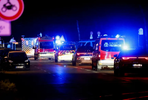
A convoy with an ambulance believed to be carrying an American health worker, who has been brought to Germany for treatment after contracting Ebola in the Democratic Republic of Congo, arrives at the Charite University Hospital in Berlin, Germany, May 20.
Axel Schmidt/Reuters
The patient, Dr. Peter Stafford, is a general surgeon who specializes in burn care who was helping patients in the city of Bunia, according to Serge.
Serge says two other doctors – Stafford’s wife, Dr. Rebekah Stafford, and Dr. Patrick LaRochelle – may have been exposed to the virus but remain asymptomatic and continue to follow established quarantine and monitoring protocols.
~News
queenislam
★★★I LOVE ALLAH★★★
queenislam
★★★I LOVE ALLAH★★★
CDC imposes Ebola travel restrictions as Houston prepares to host Congolese World Cup visitors
queenislam
★★★I LOVE ALLAH★★★
The US is restricting entry from Ebola-affected countries
queenislam
★★★I LOVE ALLAH★★★
queenislam
★★★I LOVE ALLAH★★★
queenislam
★★★I LOVE ALLAH★★★
queenislam
★★★I LOVE ALLAH★★★