TurnToIslam If you want to know@tti/2nd Edition.

queenislam

★★★I LOVE ALLAH★★★
ABU BAKR AL-RAZI (865 – 925)
Also known as Rhazes. Persian alchemist and philosopher, who was one of the greatest physicians in history.
 

queenislam

★★★I LOVE ALLAH★★★
JABIR IBN HAIYAN (722 – 804)
Also known as Geber. The father of Arab chemistry known for his highly influential works on alchemy and metallurgy.
 

queenislam

★★★I LOVE ALLAH★★★
ibn-zuhr.jpg

Ibn Zuhr.
 

queenislam

★★★I LOVE ALLAH★★★
IBN ISHAQ AL-KINDI (801 – 873)
Also known as Alkindus. Arab philosopher and scientist, who is known as the first of the Muslim peripatetic philosophers.
 

queenislam

★★★I LOVE ALLAH★★★
IBN AL-HAYTHAM (965 – 1040)
Also known as Alhazen. Arab astronomer and mathematician known for his important contributions to the principles of optics and the use of scientific experiments.
 

queenislam

★★★I LOVE ALLAH★★★
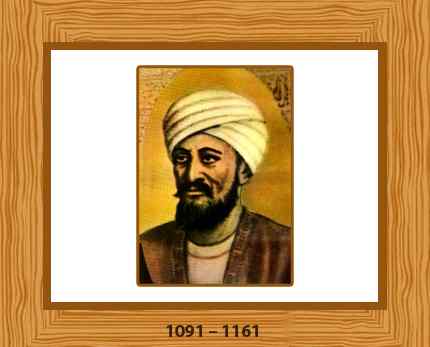
IBN ZUHR (1091 – 1161)
Also known as Avenzoar. Arab physician and surgeon, known for his influential book Al-Taisir Fil-Mudawat Wal-Tadbeer (Book of Simplification Concerning Therapeutics and Diet).
 

queenislam

★★★I LOVE ALLAH★★★
IBN KHALDUN (1332 – 1406)
Arab historiographer and historian who developed one of the earliest nonreligious philosophies of history. Often considered as one of the forerunners of modern historiography, sociology and economics.
 

queenislam

★★★I LOVE ALLAH★★★
IBN AL-BAITAR (1197 – 1248)
Arab scientist, botanist and physician who systematically recorded the discoveries made by Islamic physicians in the Middle Ages.
 

queenislam

★★★I LOVE ALLAH★★★
ABU NASR AL-FARABI (872 – 950)
Abu Nasr Muhammad al- Farabi, one the earliest Islamic intellectuals who were instrumental in transmitting the doctrines of Plato and Aristotle to the Muslim world, had a considerable influence on the later Islamic philosophers such as Avicenna.
He was an outstanding linguist who translated the Greek works on Aristotle and Plato and made a considerable additions to them of his own.
He earned the nickname Mallim-e-Sani, which is translated as “second master” or “second teacher”.
Al-Farabi completed his earlier education at Farab and Bukhara but, later on, he went to Baghdad for higher studies, where he studied and worked for a long time. During this period he acquired mastery over several languages as well as various branches of knowledge and technology. Farabi contributed considerably to science, philosophy, logic, sociology, medicine, mathematics and music, but the major ones are in philosophy, logic and sociology and for which he stands out as an Encyclopedist.
As a philosopher, Farabi was the first to separate philosophy from theology. It is difficult to find a philosopher both in Muslim and Christian world from Middle Ages onwards who has not been influenced by his views. He believed in a Supreme Being who had created the world through the exercise of balanced intelligence. He also asserted this same rational faculty to be the sole part of the human being that is immortal, and thus he set as the paramount human goal the development of that rational faculty. He considerably gave more attention to political theory as compared to any Islamic philosopher.
Later in his work, Al-Farabi laid down in Platonic fashion the qualities necessary for the ruler, he should be inclined to rule by good quality of a native character and exhibit the right attitude for such rule. At the heart of Al-Farabi’s political philosophy is the concept of happiness in which people cooperate to gain contentment. He followed the Greek example and the highest rank of happiness was allocated to his ideal sovereign whose soul was ‘united as it were with the Active Intellect’. Therefore Farabi served as a tremendous source of aspiration for intellectuals of the middle ages and made enormous contributions to the knowledge of his day, paving the way for the later philosopher and thinkers of the Muslim world.
Farabian epistemology has both a Neoplatonic and an Aristotelian dimension. The best source for al-Farabi’s classification of knowledge is his Kitab ihsa al-ulum. This work neatly illustrates Al-Farabi’s beliefs, both esoteric and exoteric. Through all of them runs a primary Aristotelian stress on the importance of knowledge. Thus al-Farabi’s epistemology, from what has been described may be said to be encyclopedic in range and complex in articulation, using both a Neoplatonic and an Aristotelian voice.
Farabi also participated in writing books on early Muslim sociology and a notable book on music titled Kitab al-Musiqa (The Book of Music) which is in reality a study of the theory of Persian music of his day, although in the West it has been introduced as a book on Arab music. He invented several musical instruments, besides contributing to the knowledge of musical notes. It has been reported that he could play his instrument so well as to make people laugh or weep at will. Al-Farabi’s treatise Meanings of the Intellect dealt with music therapy, where he discussed the therapeutic effects of music on the soul.
Farabi traveled to many distant lands throughout his life and gained many experiences a lot, due to which he made so many contributions for which he is still remembered and acknowledged. Inspite of facing many hardships, he worked with full dedication and made his name among the popular scientists of history. He died a bachelor in Damascus in 339 A.H. /950 A.D. at the age of 80 years.

 

queenislam

★★★I LOVE ALLAH★★★
AL-BATTANI (858 – 929)
Al-Battani is sometimes known by a Latinized version of his name, being Albategnius, Albategni or Albatenius. His full name was Abu Abdallah Mohammad ibn Jabir ibn Sinan al-Raqqi al-Harrani al-Sabi al-Battani.
Al-Battani’s father was Jabir ibn Sinan al-Harrani who had a high reputation as an instrument maker in Harran. The name makes the identification certain that al-Battani himself was skilled in making astronomical instruments and there is a good indication that he learnt these skills from his father.
Abdallah Muhammad Ibn Jabir Ibn Sinan al-Battani al-Harrani was born around 858 C.E. in Harran. Battani was first educated by his father Jabir Ibn San’an al-Battani, who also was a well-known scientist. He then moved to Raqqa, situated on the bank of the Euphrates, where he received advanced education and later on flourished as a scholar. At the beginning of the 9th century, he migrated to Samarra, where he worked till the end of his life. His family had been members of the Sabian sect, a religious sect of star worshippers from Harran. Being worshipers of the stars meant that the Sabians had a strong motivation for the study of astronomy. Al-Battani, unlike Thabit, another mathematician from his home town, was not a believer in the Sabian religion. His name “Abu Abdallah Mohammad” indicates that he was certainly a Muslim.
Al-Battani made remarkably accurate astronomical observations at Antioch and ar-Raqqah in Syria. The town of ar-Raqqah, where most of al-Battani’s observations were made, became prosperous when Caliph Harun al-Rashid built several palaces there.
The Fihrist describes al-Battani as one of the most famous observers and a leader in geometry, theoretical and practical astronomy, and astrology. He composed work on astronomy, with tables, containing his own observations of the sun and moon and a more accurate description of their motions than that given in Ptolemy’s “Almagest”.
The main achievements of al-Battani’s are:
• He cataloged 489 stars.
• He refined the existing values for the length of the year, which he gave as 365 days 5 hours 46 minutes 24 seconds, and of the seasons.
• He calculated 54.5″ per year for the precession of the equinoxes and obtained the value of 23° 35′ for the inclination of the ecliptic.
Rather than using geometrical methods, as other scientists had done, al-Battani used trigonometric methods which were an important advancement. Al-Battani showed that the farthest distance of the Sun from the Earth varies and, as a result, annular eclipses of the Sun are possible as well as total eclipses. Al-Battani is important in the development of science for a number of reasons, but one of these must be the large influence his work had on scientists such as Tycho Brahe, Kepler, Galileo and Copernicus.
 
Top