You are using an out of date browser. It may not display this or other websites correctly.
You should upgrade or use an alternative browser.
You should upgrade or use an alternative browser.
Allahu Akbar! HAJ NEWS 1447Hijriah 2026Masihi
- Thread starter queenislam
- Start date


queenislam
★★★I LOVE ALLAH★★★
Hajj Ministry asserts no entry to Makkah without an official Hajj permit
MAKKAH — The Ministry of Hajj and Umrah stressed the importance of all pilgrims’ affairs offices and Hajj service providers to inform pilgrims of the need to obtain an official permit to perform Hajj rituals for this year and to adhere to the approved procedures for entering Makkah and the holy sites. This is part of the ministry’s commitment to pilgrims’ safety, the quality of services provided, and enabling them to perform their rituals in a safe and organized environment.The ministry stressed that performing Hajj is restricted to those who have obtained an official permit from the competent authorities. “No leniency will be shown toward any attempt to perform Hajj without a permit, as this constitutes a clear violation of laws and regulations, and that legal penalties will be enforced against violators,” it said.
The ministry emphasized that compliance with official procedures contributes to raising safety and organizational standards, enhancing the efficiency of crowd management, ensuring the smooth flow of
movement within the holy sites, and improving the overall pilgrim experience during the season.
The ministry stated that coordination with pilgrims’ affairs offices and service providers began immediately after last year’s Hajj season concluded, through periodic meetings and ongoing awareness programs. This aims to strengthen awareness of laws and instructions, stress adherence to approved requirements, enhance compliance levels, achieve the highest standards of safety and organization, and improve the quality of services provided to pilgrims.
~News
queenislam
★★★I LOVE ALLAH★★★
RIYADH — The Supreme Court of Saudi Arabia announced that the crescent moon was not sighted on Friday evening and hence Saturday was the 30th day of Shawwal and Sunday is the first day of Dhul Qada.
In its official decision, the Crescent Sighting Committee at the Supreme Court explained that it had reviewed reports from the courts regarding the sighting of the crescent moon of Dhul Qada for the year 1447 AH on Friday evening, the 29th of Shawwal 1447 AH, according to the Umm Al-Qura calendar, corresponding to April 17, 2026.
The committee explained that, based on what was reported to it in this regard, it was decided that Saturday, April 18, would be the completion of the month of Shawwal with 30 days, in view of receiving no testimony of sighting the crescent and therefore Sunday would be the first day of the month of Dhul Qada.
~News
In its official decision, the Crescent Sighting Committee at the Supreme Court explained that it had reviewed reports from the courts regarding the sighting of the crescent moon of Dhul Qada for the year 1447 AH on Friday evening, the 29th of Shawwal 1447 AH, according to the Umm Al-Qura calendar, corresponding to April 17, 2026.
The committee explained that, based on what was reported to it in this regard, it was decided that Saturday, April 18, would be the completion of the month of Shawwal with 30 days, in view of receiving no testimony of sighting the crescent and therefore Sunday would be the first day of the month of Dhul Qada.
~News
queenislam
★★★I LOVE ALLAH★★★
First batches of pilgrims land in Madinah and Jeddah as international arrivals commence for Hajj 2026
MADINAH — The first batches of Hajj pilgrims from several countries arrived in Madinah and Jeddah on Saturday, Dhul Qada 1, marking the commencement of international arrivals for this year’s pilgrimage. They included pilgrims traveling under the Makkah Route initiative from Turkiye, Pakistan, Malaysia, and Bangladesh in addition to the pilgrims from India.
Most of the pilgrims arrived at Prince Mohammed bin Abdulaziz International Airport in Madinah on Saturday while some groups of pilgrims landed at King Abdulaziz International Airport in Jeddah. Saudi officials as well as diplomats from the respective countries accorded a warm reception for the pilgrims.
The General Directorate of Passports at Madinah airport processed the Turkish Hajj pilgrims arrived from Ankara Esenboğa Airport for the annual pilgrimage under the Makkah Route Initiative.
Saudi officials and Pakistani diplomats received first flight from Pakistan. The flight carrying pilgrims from Jinnah International Airport in Karachi, arrived at Madinah airport.
Saudi Arabia inaugurated on Saturday the third embarkation point of the Makkah Route initiative in Pakistan by launching the service from Allama Iqbal International Airport in Lahore. Pakistani Minister of Religious Affairs Sardar Muhammad Yousaf, Saudi Ambassador to Pakistan Nawaf Al-Maliki, and Saudi Director General of Passports Maj. Gen. Saleh Al-Murabba attended the launching ceremony.
The flight, under the Makkah Route Initiative, carrying Malaysian pilgrims from Kuala Lumpur International Airport, landed at Madinah airport. The first flight carrying beneficiaries of the Makkah Route Initiative departed on Saturday from Hazrat Shahjalal International Airport, Dhaka, bound for King Abdulaziz International Airport in Jeddah. Bangladesh Prime Minister Tarique Rahman and Saudi Ambassador to Bangladesh Dr. Abdullah bin Abiyah were present to see off the pilgrims at the airport.
The first batch of Indian pilgrims arrived in Saudi Arabia for the annual Haj pilgrimage, the Indian mission in Saudi Arabia said. “The first group of Indian pilgrims was received at Madinah airport by Deputy Ministers of Hajj and Umrah Prof. Abdulaziz Wazzan and Eng. Ayad Abdulrahman Rahbini, Indian Ambassador Dr. Suhel Ajaz Khan and Consul General Fahad Ahmed Khan Suri. The first flight carrying 400 pilgrims came from Mumbai, and it was followed by 10 flights from other Indian cities. The first flight carrying Indian private pilgrims landed at Jeddah airport.
The General Directorate of Passports affirmed its comprehensive readiness to facilitate a seamless entry experience for pilgrims across all air, land, and sea ports by mobilizing advanced technological resources and specialized personnel to ensure the highest service standards throughout the Hajj season.
The Ministry of Interior has been implementing the Makkah Route initiative for the eighth year in 2026. This year the number of beneficiary countries of this initiative rose to 10 with the addition of Senegal and Brunei Darussalam for the first time. Other countries are Morocco, Indonesia, Malaysia, Pakistan, Bangladesh, Turkey, Ivory Coast, and the Maldives. Since its launch in 2017, the initiative has so far served 1,254,994 pilgrims.
The Makkah Route initiative aims to provide high-quality services to pilgrims from participating countries by receiving them and facilitating their entry procedures in their home countries. This includes collecting biometric data and issuing Hajj visas electronically, completing passport control procedures at the departure airport after verifying compliance with health requirements, tagging and sorting luggage according to transportation and accommodation arrangements in the Kingdom. Pilgrims under the initiative are transferred directly to buses that transport pilgrims to their accommodations in Makkah and Madinah via dedicated routes. Partner organizations are responsible for delivering their luggage to these accommodations.
~News
queenislam
★★★I LOVE ALLAH★★★
Saudi Arabia arrests over 14,000 illegal residents in a week
April 19, 2026 | 16:24Nationwide crackdown nets 14,487 labour and residency law violators, deports 12,554
Saudi security authorities arrested 14,487 illegal residents during a week-long nationwide crackdown, the Ministry of Interior has said.
The arrests were carried out during joint inspection campaigns conducted by security forces in coordination with relevant government agencies between April 9 and April 15.
The ministry warned that facilitating illegal entry, transport or shelter could result in penalties of up to 15 years in prison and fines of up to SR1 million, along with the confiscation of vehicles and properties used.
It urged the public to report violations by calling 911 in Mecca, Riyadh and the Eastern Province, and 999 or 996 in other regions.
~News
queenislam
★★★I LOVE ALLAH★★★

~News
queenislam
★★★I LOVE ALLAH★★★
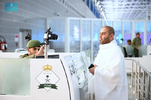
Saudi Arabia reiterates Hajj permit rule to safeguard pilgrims for 2026
- Authorities warn of penalties for unauthorized pilgrims as preparations intensify
- Move aims to streamline crowd control for one of the world’s largest religious gatherings
As preparations increase for the annual influx, the ministry has said all pilgrims’ affairs offices and licensed service providers must ensure participants obtain the required authorization and comply fully with approved procedures, reported the Saudi Press Agency.
“Performing Hajj is restricted to those who have obtained an official permit,” the ministry reiterated, adding no leniency would be shown toward unauthorized attempts to join.
The permit system is a cornerstone of Saudi Arabia’s efforts to manage the numbers of worshippers who converge on Makkah each year, helping authorities regulate crowd flows, maintain safety and improve the overall experience.
Hajj — one of the five pillars of Islam — draws millions of Muslims from around the world. In 2025, a total of 1,673,230 pilgrims — 166,654 from the Kingdom and 1,506,576 from abroad — performed the rituals, according to the Hajj Ministry and Data Saudi.
Quotas are allocated to each country and early indicators suggest strong demand for 2026, with registrations and planning already underway through national Hajj missions and digital platforms.
Saudi authorities say strict adherence to the permit system enhances crowd management efficiency, ensures smoother movement between ritual sites and reduces risks associated with overcrowding, particularly during peak rites such as those in Mina and Arafat.
The ministry added that coordination with Hajj missions and service providers began immediately after last year’s season, including regular meetings and awareness campaigns designed to boost compliance and service quality.
In recent years, the Kingdom has invested heavily in infrastructure and digital systems to handle the pilgrimage, aiming to balance spiritual access with safety in one of the largest annual gatherings in the world.
~News
queenislam
★★★I LOVE ALLAH★★★
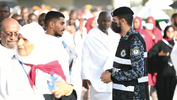
Heavy fines, deportation for Hajj permit violations as Kingdom tightens rules
- Ministry of Interior warns of penalties of up to SR100,000 for offenders and those facilitating illegal activity
- Makkah police arrest Egyptian resident for offering fake Hajj permits, fraudulent pilgrimage services
A fine of up to SR20,000 ($5,330) will be imposed on anyone performing or attempting Hajj without a permit, including visit visa holders who enter or remain in Makkah or the holy sites from April 18 to May 31.
A fine of up to SR100,000 will be imposed on anyone who applies for a visit visa for individuals who perform or attempt Hajj without a permit, or who enter or remain in Makkah and the holy sites during the same period.
The fine will be multiplied based on the number of violators involved, the Saudi Press Agency reported recently.
A similar fine will apply to anyone who transports or attempts to transport visit visa holders to Makkah or the holy sites during this period.
A fine of up to SR100,000 will also apply to anyone who provides or attempts to provide accommodation to visit visa holders, or assists or conceals them, with penalties increasing based on the number of violators.
Infiltrators, including residents and visa overstayers, will be deported and banned from entering the Kingdom for 10 years, the ministry said.
The ministry will also request courts to confiscate vehicles used to transport visit visa holders to Makkah and the holy sites during the same period, if owned by those involved.
It affirmed that anyone penalized has the right to file a grievance within 30 days of notification before the competent committee. They may also appeal the committee’s decision before the Administrative Court within 60 days of notification.
Meanwhile, Makkah police arrested an Egyptian resident for fraud after he posted social media ads offering fake permits to enter the holy sites and bogus Hajj services.
Legal action was taken and he was referred to the Public Prosecution, the SPA reported on Wednesday.
The General Directorate of Public Security urged citizens and residents to follow Hajj regulations and report violators by calling 911 in Makkah, Riyadh, Madinah, and the Eastern Province, or 999 elsewhere in the Kingdom.
~News
queenislam
★★★I LOVE ALLAH★★★
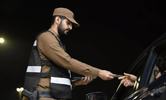
Permit restrictions for Makkah entry take effect ahead of Hajj
- Violators face penalties as authorities roll out e-permits, suspend Umrah access
- Transport readiness exercise simulates more than 1.2 million pilgrims
The measures apply to residents who do not have a permit to work in the holy sites, a Makkah-issued resident ID, or a Hajj permit, reported the Saudi Press Agency.
The General Directorate of Passports has launched an electronic application system for Makkah entry permits for resident workers during Hajj.
Applications can be submitted via Absher and Muqeem through the “Makkah Entry Permit” service, eliminating the need to visit passport offices.
Absher Individuals is designated for Gulf Cooperation Council citizens, Premium Residency holders, investors, mothers of Saudi citizens, domestic workers and non-Saudi family members.
The Muqeem portal serves employees of Makkah-based establishments and those contracted during Hajj.
The Ministry of Interior also announced measures to ensure pilgrims’ safety and a trouble-free Hajj, the SPA reported.
The deadline for Umrah visa holders to leave the Kingdom is Saturday, April 18, and Umrah permits via the Nusuk platform will be suspended from April 18 to May 31 for citizens, GCC nationals, residents and other visa holders.
All visa holders will be barred from entering or staying in Makkah from April 18, except those with a Hajj visa. Anyone violating the rules will face legal penalties.
Meanwhile, the General Transport Center, part of the Royal Commission for Makkah City and Holy Sites, conducted a virtual simulation of the transport system in the holy sites in coordination with more than 24 other entities, as part of preparations to test efficiency and improve coordination.
The exercise simulated pilgrims’ movements between Makkah and the holy sites using 3,000 buses across five operational phases and 15 main routes, testing crowd flow and traffic management.
It modeled the transport of more than 1.2 million virtual pilgrims through over 75,000 trips, with the participation of more than 20,500 personnel and 74 transport companies.
The simulation also included field implementation, starting with readiness, followed by movement to Arafat, then Muzdalifah and ending in Mina, to test performance under varied conditions.
The exercise highlights strong coordination between the different bodies involved and underlines the strengths of a system capable of handling high crowd densities, improving procedures and ensuring smoother mobility.
~News